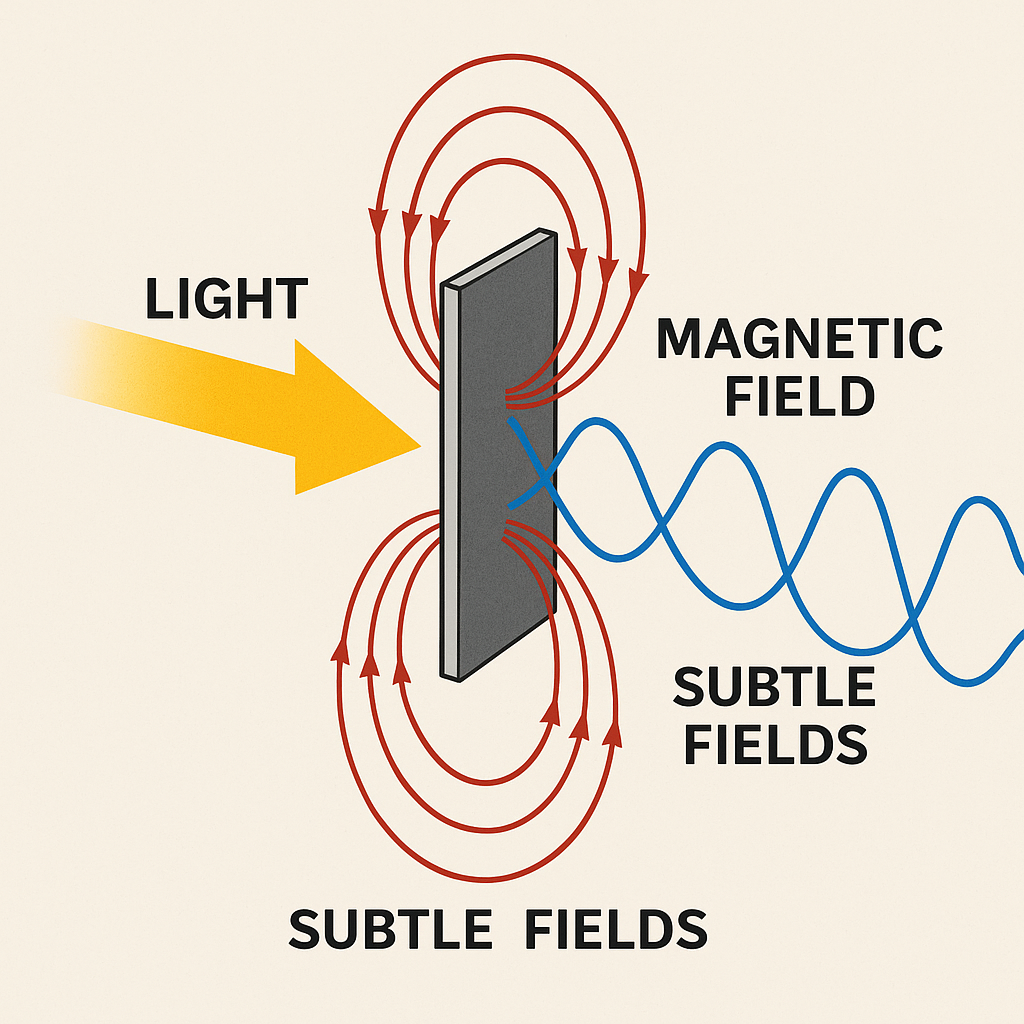
The Schumann Resonance is often described as Earth’s natural frequency. It is a subtle electromagnetic rhythm that surrounds and connects all life on the planet. More than a mystical idea, it represents a scientifically documented phenomenon. Lightning strikes generate standing waves in the Earth–ionosphere cavity, creating this natural resonance.
At its core, the Schumann Resonance is centered at 7.83 Hz. It is often called the Earth’s “heartbeat.” This base frequency, and its harmonics, circle the globe as a constant background signal.
Understanding the Schumann Resonance allows us to explore its possible influence on human well-being. It may also support meditation and energy-balancing practices.
For those interested in subtle energies, the resonance is more than a physical measurement. It acts as a natural bridge between Earth science and vibrational healing. By studying it, we can consider its role in health, meditation, and energy practices.
What is Schumann Resonance?
The Fundamental Frequency (7.83)
The Schumann resonance is the name given to a set of very low-frequency electromagnetic waves. These waves naturally exist in the space between Earth’s surface and the ionosphere.
They are created when lightning discharges strike the planet. The strikes send energy into the Earth–atmosphere cavity, generating standing waves that circle the globe.
Why It Matters for
Although this phenomenon is grounded in physics, it also fascinates those studying consciousness, meditation, and energy healing. The base frequency of the Schumann Resonance overlaps with human brainwaves, especially alpha and theta states. Because of this, many see it as a bridge between natural science and subtle human experiences.
The Physics Behind Schumann Resonance
The Earth–Ionosphere Cavity
To understand the Schumann resonance, we first need to look at the unique cavity formed between Earth’s surface and the ionosphere, the electrically charged layer of the atmosphere. This natural cavity acts like a gigantic waveguide, allowing electromagnetic waves in the extremely low frequency (ELF) range to travel around the globe.
How Lightning Generates Standing Waves
When lightning strikes, it releases bursts of electromagnetic energy. Some of this energy becomes trapped in the Earth–ionosphere cavity, bouncing back and forth between the ground and the upper atmosphere. As these waves reflect and interfere with each other, they create standing waves at specific frequencies, what we now recognize as the Schumann resonances (see more from NASA’s explanation)
Stable but Dynamic Frequencies
The most stable and strongest of these frequencies is around 7.83 Hz. Other harmonics usually observed at approximately 14, 20, 26, and 33 Hz. The exact values can shift slightly depending on atmospheric conditions, solar activity, and the time of day. For this reason, the Schumann resonances. is not only a constant global phenomenon but also a sensitive indicator of changes in the ionosphere and weather patterns.
This physics foundation explains why the resonance is stable yet dynamic. It remains tied to the geometry of the Earth and its atmosphere, but its intensity and clarity can vary depending on natural processes. In this way, the Schumann resonances. represents both a steady background frequency and a living reflection of the planet’s atmospheric activity.
Measuring Schumann resonances in the Real World
Specialized Instruments and Techniques
Detecting theSchumann resonances requires specialized equipment. The frequencies involved are extremely low and the signals are very weak. The resonance occurs in the extremely low frequency (ELF) range, which is far below the range of human hearing and cannot be picked up by ordinary radios or audio devices.
Scientists typically use induction-coil magnetometers or large electric field antennas to capture these signals. These instruments are designed to sense minute changes in the Earth’s electromagnetic field, often at the level of picoTeslas. To separate the resonance from background noise, researchers also apply advanced signal-processing techniques, filtering out interference and isolating the peaks at 7.83 Hz and its harmonics.
Observatories and Field Measurements
Most continuous measurements are carried out at dedicated observatories around the world, often located in remote areas to reduce man-made interference. Balloon experiments and satellite instruments have also been used to detect the resonance above the surface. These real-world measurements not only confirm the stability of the Schumann resonances, but also reveal how it shifts subtly with changes in lightning activity, ionospheric conditions, and even solar storms.
Why Measurements Matter
For the scientific community, these measurements are more than technical achievements. They provide a window into global lightning patterns, atmospheric dynamics, and space weather. For those exploring subtle energies, they also demonstrate that the Schumann resonances is not an abstract idea, but a measurable rhythm of the Earth itself.
Myths vs. Facts about Schumann Resonance
Myth 1: Earth’s Frequency Jumped to 36 Hz
This is one of the most common misconceptions. In reality, the fundamental frequency remains around 7.83 Hz. The Earth–ionosphere cavity determines this value, so it cannot suddenly shift. What does change are the amplitudes of the harmonics, which may appear stronger during storms or solar events.
Myth 2: Schumann Resonance Is the Same as Earth’s Vibration
The Schumann resonance is not a vibration of Earth’s crust or core. Instead, it is an electromagnetic resonance in the atmosphere. Lightning excites waves that bounce between the ground and the ionosphere. While people poetically call it the “heartbeat of Earth,” in science it refers to an atmospheric phenomenon.
Myth 3: Schumann Resonance Directly Controls Human Consciousness
The 7.83 Hz frequency does fall within the alpha brainwave range, linked to relaxation and meditation. This has led to speculation about its influence on human consciousness. However, no scientific proof shows a direct cause-and-effect relationship. At most, it may act as a subtle environmental background, not a controlling force.
Fact: A Stable, Measurable Phenomenon
Since it was predicted in the 1950s, Schumann resonance has been measured worldwide with specialized instruments. Its frequencies remain stable because they are tied to Earth’s geometry. Amplitudes can vary with lightning activity and atmospheric changes, but the base resonance does not shift.
Human Health & Schumann Resonance — What Does Science Say?
Because the fundamental Schumann resonance is close to 7.83 Hz, many researchers and practitioners have wondered if it might influence human biology. This frequency lies within the alpha brainwave range (about 8–12 Hz), which is associated with relaxation, calm focus, and meditation. The overlap has led to speculation that the Earth’s resonance could play a subtle role in supporting mental and physical well-being.
Scientific studies have explored possible correlations between the resonance and human rhythms such as brain activity, circadian cycles, and even heart rate variability. Some experiments suggest that people may feel more balanced or focused when exposed to electromagnetic fields in this range. Others report improved focus when exposed to these fields.
However, the evidence is not yet conclusive. While intriguing connections have been proposed, no large-scale, peer-reviewed studies have established a direct causal relationship between Schumann resonance and human health. The resonance is measurable and real, but its influence on the body and mind remains a field of open inquiry rather than proven fact.
That said, many people in the fields of meditation, holistic therapy, and energy healing continue to explore this resonance as a supportive background frequency. By treating it as a natural rhythm of the Earth, practitioners use it symbolically or practically in relaxation exercises, sound therapy, or guided meditations. From a scientific perspective, it is best to view the Schumann resonance as a fascinating natural signal that may align with human rhythms, but not as a guaranteed tool for healing or transformation.
Applications & Research Frontiers
The study of the Schumann resonance goes far beyond curiosity. It has become a practical tool in both atmospheric science and space research, while also inspiring new approaches in the fields of health and energy practices.
Monitoring global lightning activity.
Because the resonance is generated by lightning, scientists can use it as a natural indicator of storm patterns around the world. By tracking changes in the resonance, researchers gain insight into thunderstorm distribution, storm intensity, and even long-term climate trends.
Studying the ionosphere and space weather.
The Schumann resonance is highly sensitive to the state of the ionosphere. Solar flares and geomagnetic storms disturb the ionosphere. When this happens, the resonance patterns shift. This makes it a valuable tool for space weather monitoring.
Innovations in instrumentation.
Advances in technology have made it possible to build portable ELF receivers that can detect Schumann resonance outside of laboratory settings. These instruments allow researchers to measure the resonance in real time and explore how it varies by location and conditions.
Exploring links with human wellness.
While still in the early stages, some interdisciplinary projects are testing whether synchronization with Schumann resonance frequencies may have subtle effects on human brainwaves, stress response, and overall well-being. This area of research remains open, bridging neuroscience, bioelectromagnetics, and holistic practices.
In short, the applications and frontiers of Schumann resonance research highlight its dual importance: as a scientific window into Earth’s atmosphere and space environment, and as a potential point of connection to human health and energy awareness.
Frequently Asked Questions on Schumann Resonance
Is 7.83 Hz really the Earth’s heartbeat?
The term “heartbeat of the Earth” is poetic rather than scientific. The Schumann resonance is an electromagnetic standing wave in the atmosphere, not a physical pulse of the planet. Still, the phrase reflects its role as a constant natural rhythm surrounding life.
Can meditation tune into the Schumann resonance?
Because 7.83 Hz falls within the alpha brainwave range, some believe meditation can align with this frequency. Scientific proof is limited, but many practitioners report relaxation and focus when using tones close to this frequency.
Why do some graphs show spikes above 30 Hz?
These spikes are usually amplitude increases of existing harmonics, not a change in the base frequency. The fundamental ~7.83 Hz remains stable, defined by Earth’s geometry.
Does the Schumann resonance affect human health?
Research shows possible correlations with brain activity and circadian rhythms, but no direct causal link is proven. It may act as a subtle background signal, not a controller of health or mood.
Why do measurements differ from one site to another?
Local interference, weather, and instrument sensitivity can cause variation. Remote observatories provide the clearest readings, while urban areas add noise that makes detection harder.
Are there websites that measure the Schumann resonance live?
Yes. Several observatories publish real-time Schumann resonance data. The most cited include:
- Hartenstein Research Station (Germany) – ELF monitoring with live spectrograms.
- Tomsk State University (Russia) – Daily updated charts.
- Independent ELF projects – Real-time magnetometer data from researchers and enthusiasts.
These charts show time on the horizontal axis, frequency on the vertical, and intensity through color brightness. Stable lines at 7.83 Hz, 14 Hz, 20 Hz, and above are the resonances.
⚠️ Note: amplitudes can spike, but frequencies remain stable. Many social posts misinterpret graphs as showing Earth’s frequency “jumping,” which is incorrect.
Summary & Final Thoughts
The Schumann resonance is one of Earth’s most fascinating natural phenomena. Born from the interaction of lightning with the ionosphere, it produces standing electromagnetic waves that circle the globe at stable frequencies, with the fundamental tone near 7.83 Hz. This steady rhythm has earned the nickname “the heartbeat of the Earth,” reminding us that our planet carries a constant, subtle vibration.
From a scientific perspective, the resonance is a valuable tool for studying lightning activity, atmospheric dynamics, and even space weather. It remains stable because it is tied to the geometry of the Earth–ionosphere cavity, though its intensity may rise and fall with storms and solar events.
From an energetic and holistic viewpoint, the resonance has inspired a deeper conversation about the links between natural frequencies and human well-being. While no direct causal relationship has been proven, its overlap with human brainwave ranges continues to spark curiosity among researchers, meditators, and energy practitioners alike.
In separating myths from facts, we see that the Schumann resonance is not a mysterious force that suddenly changes or controls human behavior. Instead, it is a measurable, scientifically verified rhythm that reflects the dynamic balance of our planet’s atmosphere. By appreciating it both scientifically and symbolically, we gain a richer perspective: one that honors the Earth’s natural patterns while inviting us to explore how those patterns may connect with our own inner rhythms.
Ultimately, the Schumann resonance stands as a reminder that we live within a living, resonant environment. Whether studied in laboratories, observed on live spectrograms, or explored through meditation, it continues to be a bridge between physics and subtle energy, grounding us in the reality that Earth itself is alive with frequency.